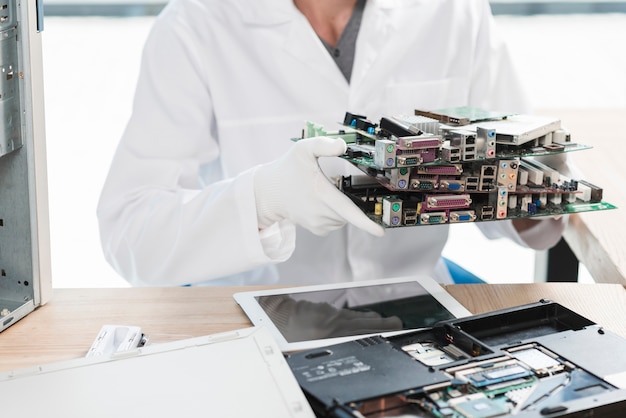
As we traverse deeper into the digital age, the future innovations in computer hardware are not only exciting but also pivotal in shaping how we interact with technology. From enhancing processing capabilities to improving energy efficiency, the next wave of hardware advancements promises to revolutionize our computing experience. This article explores emerging technologies on the horizon, anticipates hardware advancements, and highlights the trends that are shaping the future of computing.
Quantum Computing: The Next Frontier
One of the most talked-about emerging technologies on the horizon is quantum computing. Unlike classical computers, which process information using bits (0s and 1s), quantum computers utilize qubits, enabling them to perform calculations at an unprecedented speed. This leap in computational power could revolutionize various fields, including cryptography, drug discovery, and complex problem-solving.
Quantum computing is still in its infancy, but companies like IBM and Google are making significant strides. As researchers continue to overcome the challenges of error rates and qubit stability, we can expect more practical applications of quantum technology in the coming years. The implications for industries reliant on data analysis are monumental, as quantum computers could solve problems that are currently beyond the reach of even the most advanced supercomputers.
Neuromorphic Computing: Mimicking the Human Brain
Another thrilling frontier in hardware innovation is neuromorphic computing. This approach mimics the neural structure of the human brain, enabling machines to process information in a more intuitive way. Unlike traditional architectures that rely on linear processing, neuromorphic chips use a parallel approach, allowing for more efficient data handling.
With neuromorphic computing, tasks such as image and speech recognition become more sophisticated. Researchers at institutions like Stanford and MIT are developing chips that mimic synapses and neurons, which could lead to breakthroughs in artificial intelligence (AI) applications. The potential for these advancements to enhance machine learning algorithms is vast, paving the way for more human-like interactions between computers and users.
Energy-Efficient Hardware: Sustainability Meets Performance
As awareness of environmental issues grows, the demand for energy-efficient hardware continues to rise. Manufacturers are focusing on creating components that consume less power while maintaining high performance. This trend not only benefits the environment but also reduces operating costs for businesses and consumers.
New architectures, such as ARM processors, are leading the charge in this domain. Known for their low power consumption and high efficiency, ARM chips are increasingly being used in devices ranging from smartphones to data centers. As technology advances, we can anticipate hardware advancements that prioritize sustainability without compromising speed or functionality.
Flexible and Wearable Hardware: The Rise of IoT
The Internet of Things (IoT) is driving a new wave of hardware innovations focused on flexibility and wearability. As more devices become interconnected, the demand for hardware that can seamlessly integrate into daily life is growing. From smart home appliances to wearable fitness trackers, the trend is toward hardware that enhances connectivity and user experience.
Future innovations will likely include more compact and versatile components, allowing devices to be smaller yet more powerful. For example, flexible displays and batteries will enable new form factors for smartphones and other consumer electronics. As these advancements continue, the potential for creating smart environments that learn and adapt to user preferences becomes increasingly feasible.
5G and Beyond: Networking Hardware Innovations
With the rollout of 5G networks, the demand for advanced networking hardware is surging. Trends shaping the future of computing include innovations in routers, switches, and other networking components designed to handle the increased speed and capacity that 5G offers. These innovations will enable real-time data transfer and improved connectivity for a wide range of applications, from autonomous vehicles to smart cities.
As the demand for bandwidth-intensive applications grows, hardware that supports faster data rates and lower latency will be crucial. Expect to see developments in network infrastructure that utilize advanced technologies such as millimeter-wave technology and Massive MIMO (Multiple Input Multiple Output) antennas, which will significantly enhance network performance.
The Rise of AI Hardware: Accelerating Machine Learning
Artificial intelligence (AI) is becoming an integral part of our daily lives, and the hardware designed to support AI workloads is evolving rapidly. Traditional CPUs are being complemented by Graphics Processing Units (GPUs) and specialized AI chips optimized for machine learning tasks. These innovations are making it possible to train complex models faster and more efficiently.
The emergence of Application-Specific Integrated Circuits (ASICs) and Tensor Processing Units (TPUs) specifically designed for AI computations is a game changer. These chips are tailored for particular tasks, resulting in increased performance and energy efficiency. As the demand for AI capabilities grows, the evolution of hardware advancements in this field will likely lead to even more powerful and efficient computing solutions.
Conclusion
The landscape of computer hardware is evolving at a breakneck pace, with future innovations in computer hardware poised to transform our interaction with technology. From the mind-bending potential of quantum computing to the energy-efficient solutions driven by sustainability concerns, the next era of hardware promises to be dynamic and full of possibilities. By keeping an eye on emerging technologies on the horizon, anticipating hardware advancements, and understanding trends shaping the future of computing, we can prepare ourselves for a future where technology continues to redefine the boundaries of possibility. Embrace the changes ahead, and you’ll be well-equipped to thrive in this exciting technological landscape.