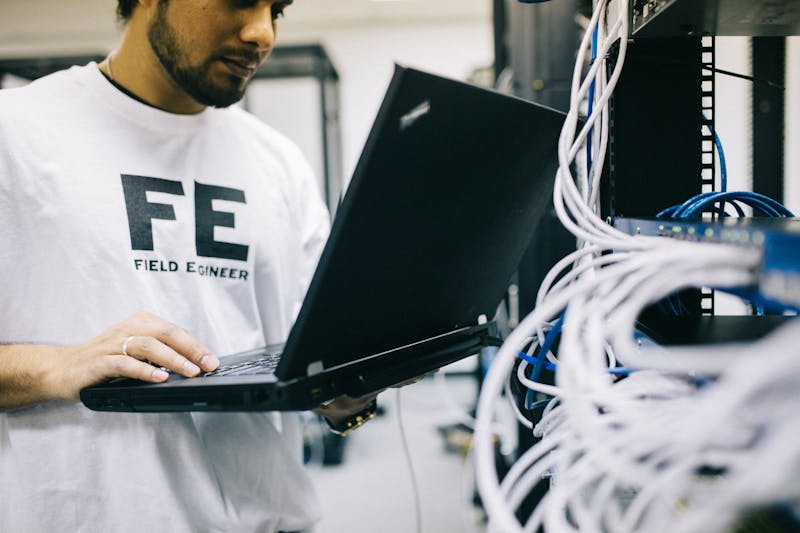
The world of computer networking is evolving at a remarkable pace, driven by advancements in technology and the increasing demands of a hyper-connected society. As we move forward, the future of computer networking promises to bring even more powerful, flexible, and intelligent networks that will redefine the way we live and work. From enhanced security measures to groundbreaking innovations in communication, the landscape of networking is poised for radical change.
Trends Shaping Networking Technologies
Several key trends shaping networking technologies are emerging that will undoubtedly influence the future. The first and most obvious is the rise of 5G. This next-generation wireless standard is set to revolutionize network speed and connectivity, enabling faster data transmission, reduced latency, and broader bandwidth. The full potential of 5G goes beyond just faster mobile phones; it will empower Internet of Things (IoT) devices, smart cities, and even autonomous vehicles. With near-instantaneous communication, industries will be able to adopt new technologies that were previously limited by the constraints of older networking systems.
Another major trend is the growing importance of software-defined networking (SDN). In traditional networks, hardware played the central role in managing network traffic, but the future of computer networking is increasingly being controlled by software. SDN decouples the control plane from the data plane, allowing for dynamic and programmable network configurations. This makes networks more agile, adaptable, and able to respond to changes quickly, which is essential as the complexity and scale of network environments continue to grow.
Predictions for Network Advancements
Looking ahead, predictions for network advancements center around automation and artificial intelligence (AI). AI-driven networking is set to become a significant player, transforming how networks are managed and optimized. Intelligent networks will be able to detect issues, troubleshoot problems, and even predict failures before they occur, all without human intervention. This leap in automation will make networks more reliable, reduce downtime, and cut operational costs dramatically.
Furthermore, the adoption of edge computing is set to increase, bringing processing power closer to the source of data. Edge computing allows devices to process data locally rather than relying on distant cloud servers, reducing latency and improving performance. This will be a game-changer for applications that require real-time data processing, such as virtual reality, autonomous vehicles, and smart manufacturing.
One of the more futuristic predictions for network advancements includes quantum networking. While still in its infancy, quantum networking could revolutionize data transmission by utilizing the principles of quantum mechanics. This technology promises ultra-secure communication and the ability to process vast amounts of data at unprecedented speeds. Though widespread adoption may be years away, it is undoubtedly one of the most exciting developments on the horizon.
Innovations on the Horizon
As we look to innovations on the horizon, one cannot overlook the rapid expansion of IoT. The number of connected devices is expected to exceed 75 billion by 2025, and this explosive growth will place enormous strain on traditional network infrastructures. To address this, networks of the future will need to be more efficient, secure, and capable of handling a massive influx of data. We can expect the development of more advanced protocols and standards to accommodate this connectivity surge while ensuring privacy and security.
Blockchain technology is also being explored as a solution to enhance network security. By creating decentralized and tamper-resistant networks, blockchain could provide a new layer of trust and transparency, particularly in industries like finance, healthcare, and supply chain management, where data integrity is paramount.
Additionally, Wi-Fi 6 and beyond will play a pivotal role in the future of computer networking. With improved throughput, efficiency, and the ability to support more devices, the next generation of wireless networking technology will be essential as our reliance on wireless connectivity continues to grow. Wi-Fi 6 will be particularly beneficial in environments with a high density of devices, such as large offices, airports, and stadiums, where bandwidth demand is at its highest.
Challenges to Overcome
While these innovations on the horizon are exciting, they come with their own set of challenges. Cybersecurity remains a top concern as networks become more interconnected and complex. As more devices and systems become networked, the potential attack surface expands, requiring robust security solutions to safeguard against data breaches and malicious attacks.
Another challenge lies in ensuring the scalability of future networks. As billions of devices come online, networks must be able to scale efficiently without sacrificing performance or security. This will require a combination of new architectures, advanced algorithms, and increased bandwidth capabilities.
Conclusion
The rapid pace of change in the networking landscape makes this an exciting time for both professionals and enthusiasts alike. The future of computer networking is being shaped by technologies like 5G, AI, edge computing, and quantum mechanics, all of which promise to transform the way we communicate and interact with the world. By staying abreast of the trends shaping networking technologies and keeping an eye on innovations on the horizon, businesses and individuals alike can prepare for a future where networks are faster, smarter, and more secure than ever before. Whether it’s predictions for network advancements or the latest breakthroughs in communication, one thing is clear: the future of networking is bright, and the possibilities are endless.